Phylogenetic Resources
Some Context:
Part of my dissertation involves the extensive use of viral genomes and methods of analyzing them to understand the spread of avian influenza in North America.
I will be the first to admit that I did not enter graduate school as a master of phylogenetic methods. I have had to learn a lot in order to articulate and actually make progress on the ideas that I have set forth in my dissertation.
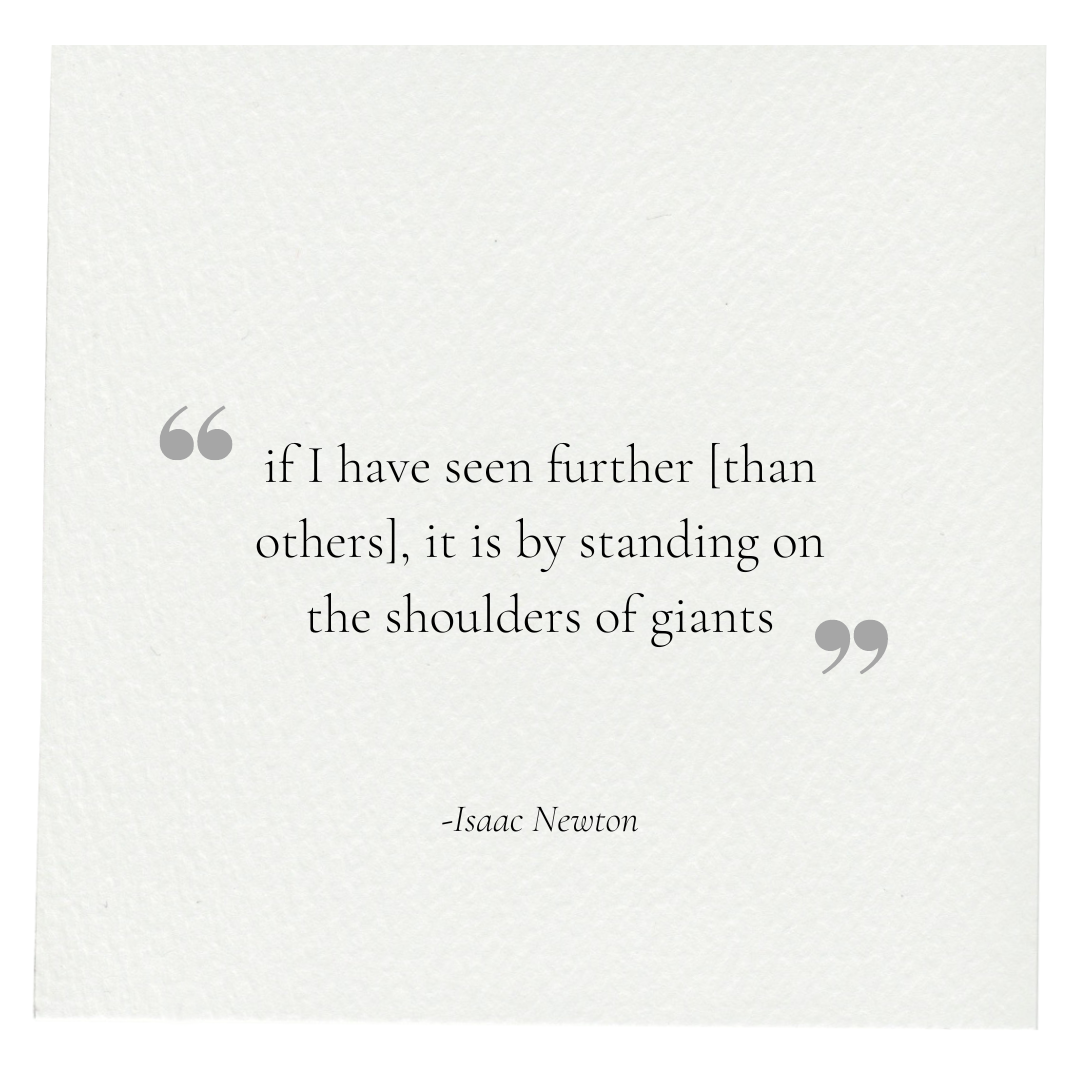
One of my favorite quotes is by Isaac Newton which states “if I have seen further [than others], it is by standing on the shoulders of giants”.
I have used that quote and the resultant ideology in so many areas of my life and this field of study is no exception. With that in mind here is a list of some of the resources (books, programs, tutorials) that I have used to see further than I could have seen by myself.
On the field of Phylogenetics:
Learning From Trees by Luke Harmon. An excellent book on learning the basics and theory in the field of phylogenetic comparative methods.
Phylogenetic Comparative Methods in R by Liam Revell and Luke Harmon. An amazing R package that is constantly “evolving” and gaining new functions all the time. This package also makes plotting phylogenies wonderful
The Phytools Blog by Liam Revell An awesome way to learn more about working with the R package Phytools, in addition to keeping up to date with the new functions and tools
Decoding Genomes: From Sequences to Phylodynamics by Tanja Stadler, Carsten Magnus, Timothy Vaughan, Joëlle Barido-Sottani, Veronika Bošková, Jana S. Huisman, Jūlija Pečerska. A recent book but from the intro chapters that I have read so far it is very approachable and informative. I love the idea of explaining the whole workflow.
Molecular Evolution: A Statistical Approach by Ziheng Yang. This book is a deep dive into the work of phylogentic inference. I am using it to study for my Qualifying exams
Molecular Evolution: A Phylogenetic Approach by Roderick D.M. Page and Edward C. Holmes. Another great book on phylogenetics. Plus it was written by Dr. Holmes who is was my friends original PI.
At the intersection of Bayesian Statistics and Phylogenetics:
BEAST Developed by Andrew Rambaut, Alexei Drummond, Daniel Ayres, Guy Baele, Philippe Lemey, and Marc Suchard. The Bayesian Evolutionary Analysis by Sampling Trees. A cross platform software for the Bayesian analysis of molecular sequences using MCMC. This website also has amazing tutorials*
BEAST2 A rewrite of BEAST1 with some additional integration in the R environment.
BEAST Book By Alexei J. Drummond and Remco R. Bouckaert. A excellent book on the foundations of phylogenetics using BEAST. It also includes information for developing the software itself.
BAYESIAN PHYLOGENETICS Methods, Algorithms, and Applications Another great book I am working through now that digs into all things Bayesian and phylogenetics.
Bayes Rules by Alicia A. Johnson, Miles Q. Ott, Mine Dogucu. If you like tidyverse and want a different approach to learning Bayesian statistics then look no further. This is a great book
Statistical Rethinking by Richard McElreath I just read this book as part of a advanced bio-statistics course. It does a fantastic job at introducing learners to the theory and practice of Bayesian statistics
Statistical Rethinking Online Course I just found out that McElreath posts his lectures online. This is a great resource.
On Plotting and Other tools:
FigTree This software was designed originally to work with BEAST. It is very intuitive.
Data Integration, Manipulation, and Visualization of Phylogenetic Trees This was a lifesaver when I came across it. It uses the grammar of graphics we are used to with packages like ggplot and implements them into phylogenetic trees!
Some bonus tools and books for coding:
These books are not related to the above but are useful for learning purposes.
R for Data Science This will teach you how to do data science in R and set you up well
Statistics for Ecologists by John Fieberg. This book is a wonderful review of statistics with a focus on applications in Ecology. I highly recommend, also the author is a really cool person
Where Good Ideas Come From: The Natural History of Innovation I read portions of this book during the first year of my PhD. It changed the way I think about ideas and was very helpful.
In Summary:
Well that is a lot of different things but I hope that you, my dear reader, might find something useful here. I hope that you can use these in your own scientific career or at the very least get a little peak into the wild world that is viral phylogenetics.
Side Note: As you might be getting by now I am a little bit of a book dragon (I hoard books and then very slowly work my way through them lol).
Until next time keep your eyes to the sky.
Cheers,
Jonathan Dain