It’s so fluffy I am gonna die!
Here Be Chicks…
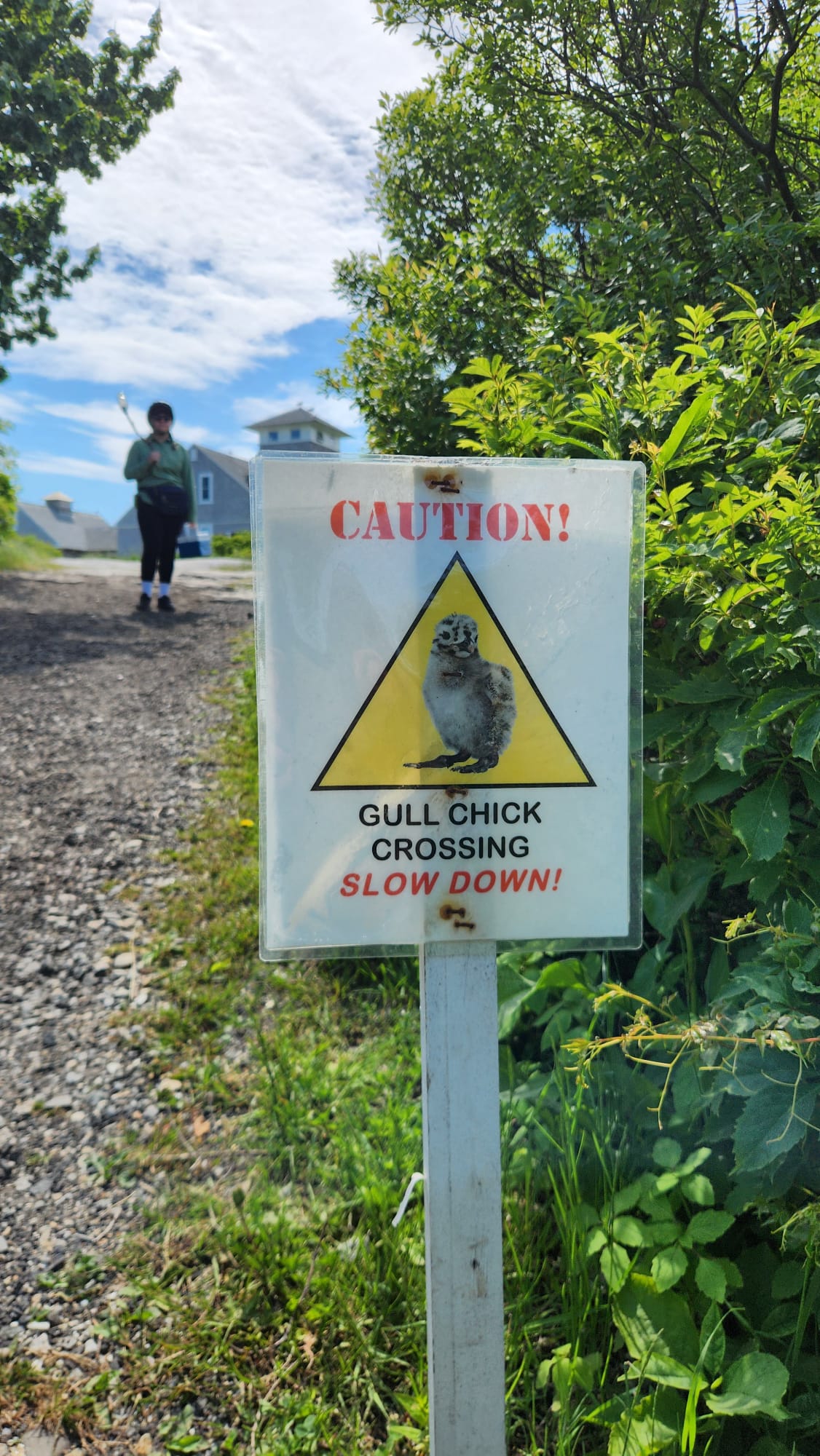
Another trip to Appledore to hold chicks? COUNT ME IN!
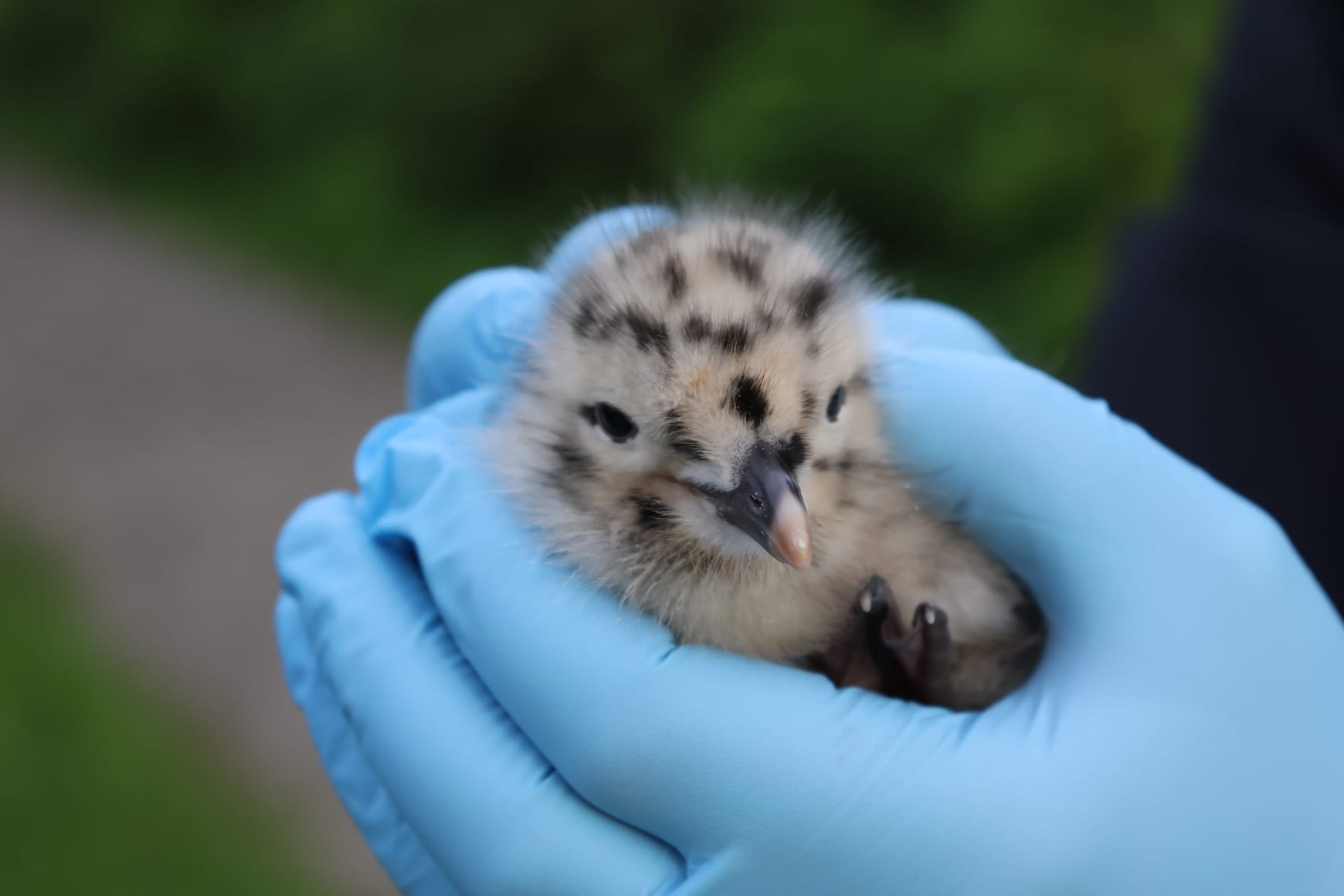
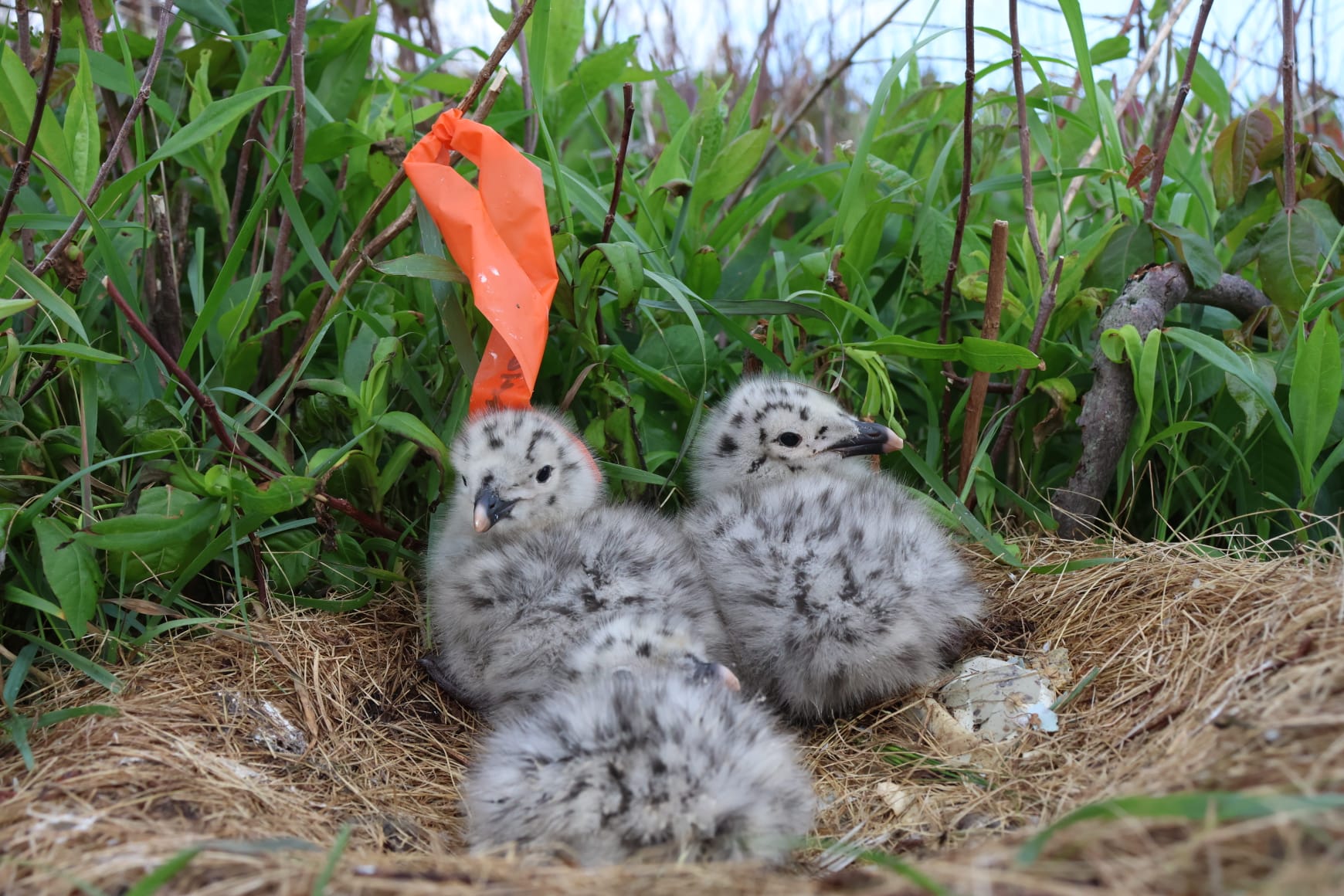
I am surrounded by adorable baby gulls, little balls of down wobbling and squawking. It is a sight to behold, but this much cuteness comes with a cost - extremely protective parents. Parents across the animal kingdom don’t enjoy their children getting picked up by anything other than themselves. Great Black Back Gulls are no exception. Moments after I picked up a exceptionally adorable lil munchkin I was sprayed across the back by something warm and wet. “Oh well it was time to change shirts anyway”, I thought as the fecal sample ran its way down my back. I brought the chick back to Kate who assisted me in taking a oral, cloacal swab, and a fecal sample from the chick. We repeated this process, me grabbing a chick, getting pooped on or swooped, and then sampling for each chick of the nest. Three chicks in this nest, a healthy clutch. It will be great to see them in a few weeks for the fledgling banding but that is another blog post (coming soon….).
Why are we handling these chicks in the first place? Well our purpose is two fold. If you have read any of the other articles on this blog you would not be surprised that we are looking for avian influenza. Part of my project is interested in the context a bird is in when it gets infected with avian influenza. These young chicks likely have maternal antibodies against influenza so infections are unlikely but if present would be very interesting to know.
That said our lab, the VirusPlusLab, is also beginning to work with non-virus microbes. We’re particularly interested in the “microvirome” – the collection of bacteria and viruses that live inside an animal. Understanding how the microvirome develops in young seabirds could provide insights into avian health and disease dynamics. Kate VanBrussel, our post-doctoral student, was just awarded a Healey Research Grant from UMass Boston to study this in detail.
For this study, we’re collecting samples from both adult gulls and their chicks. When an adult gull pooped on us (yes, this happens a lot in fieldwork!), we targeted their nest for later sampling. We affectionately called these the “PTP’s” – parents that pooped. We collected samples from 11 PTP nests, which will hopefully give us a unique look into the transfer of microbes from parent to offspring as well as early microvirome assembly in a unique seabird. In other words this is some pretty nifty stuff, and I am glad I get to be a small part of it. Even if that part serves as target practice for the angry parental gulls.
The Cute Stuff:
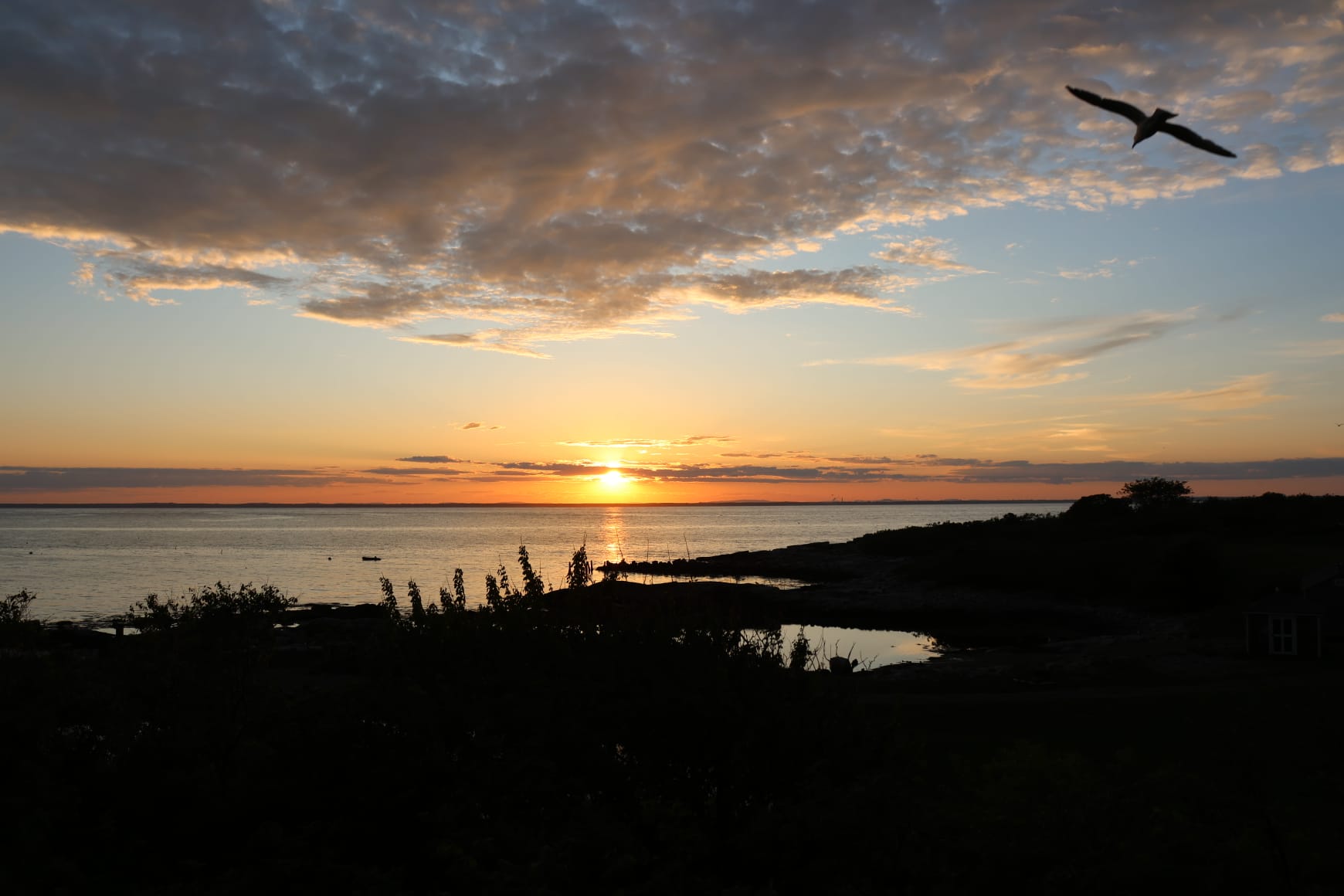
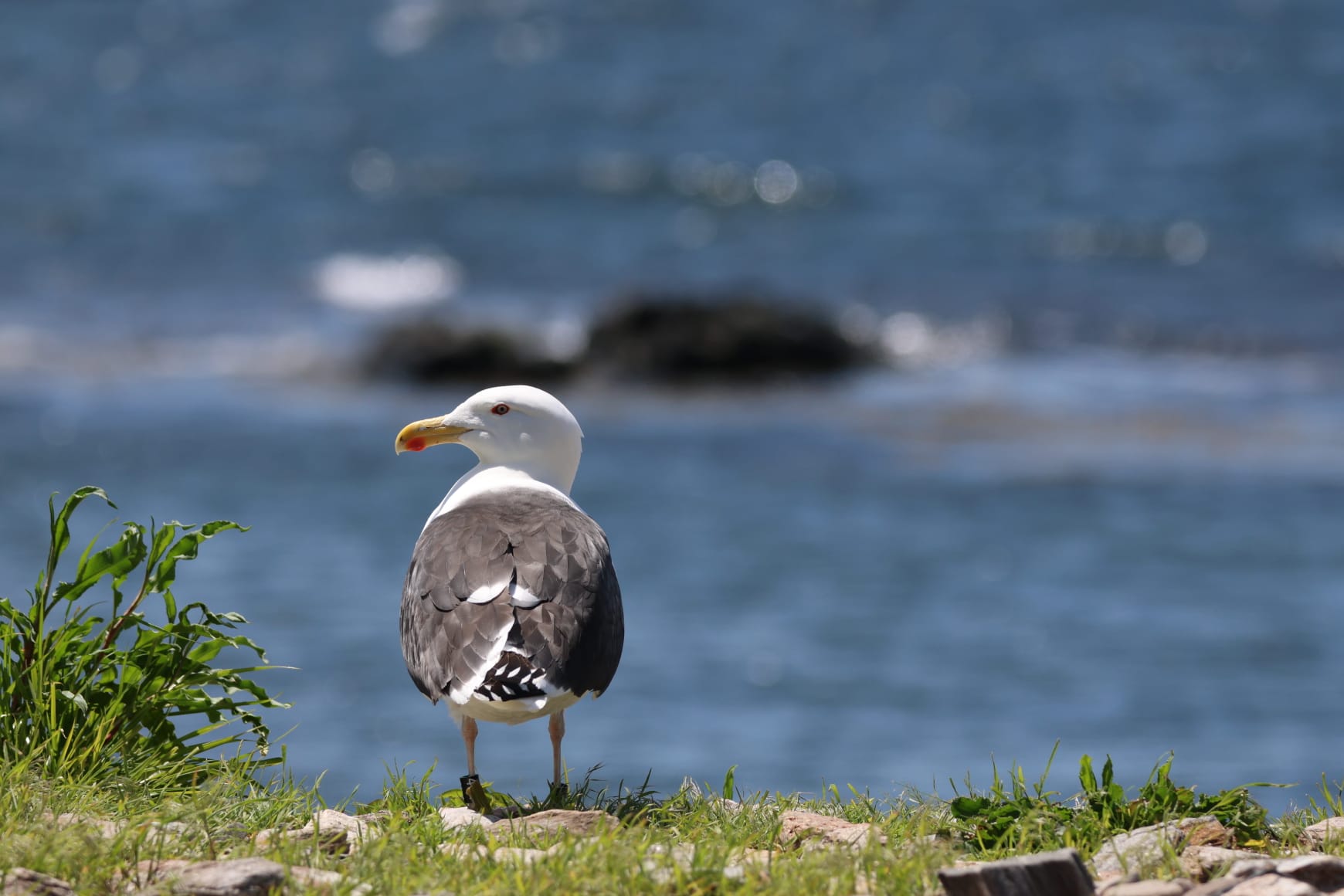
Now for the things that I am sure you all are waiting for. Cute pictures of baby gulls and stories from the island. To start here is a beautiful sunset photo I took that a gull photo bombed.
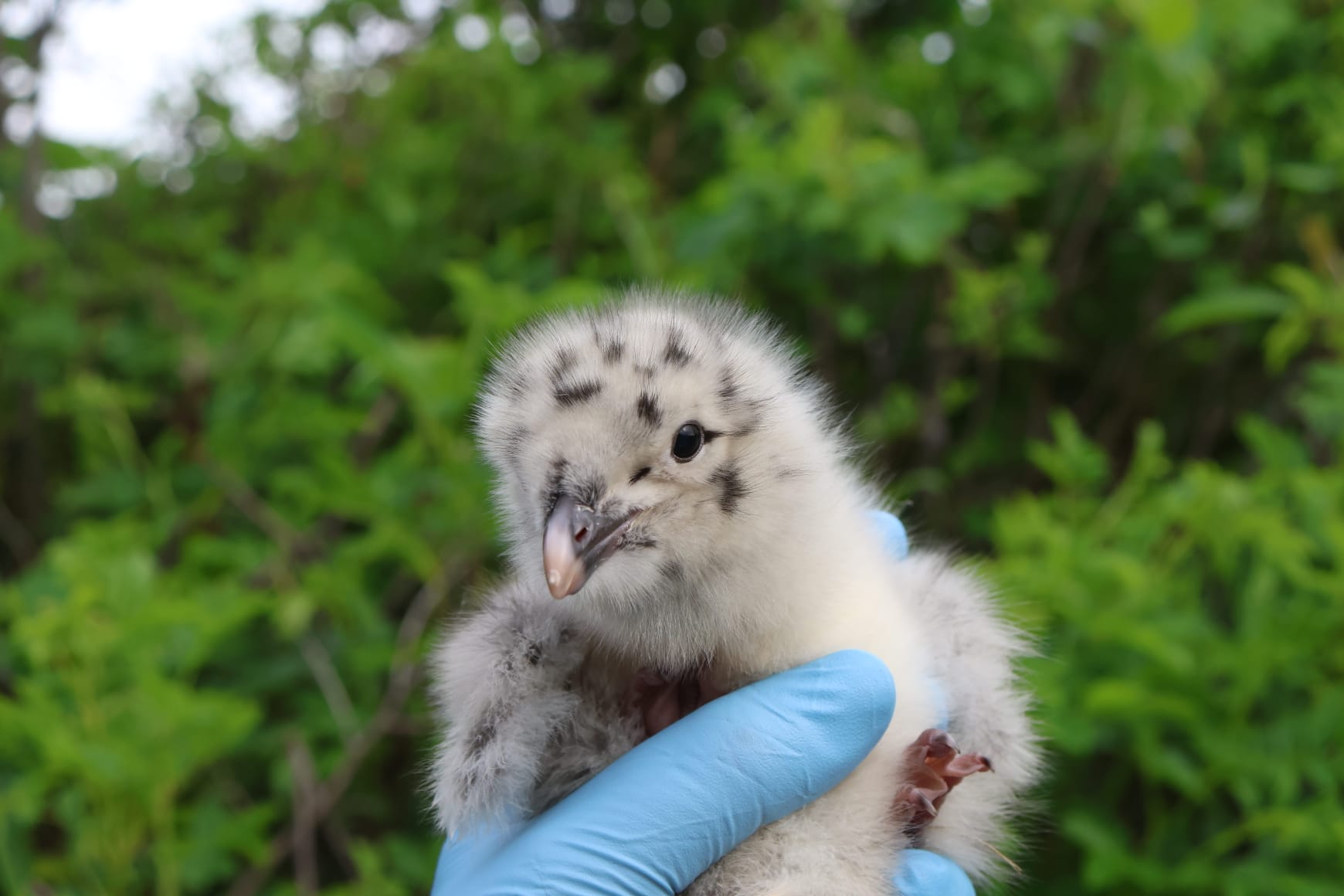
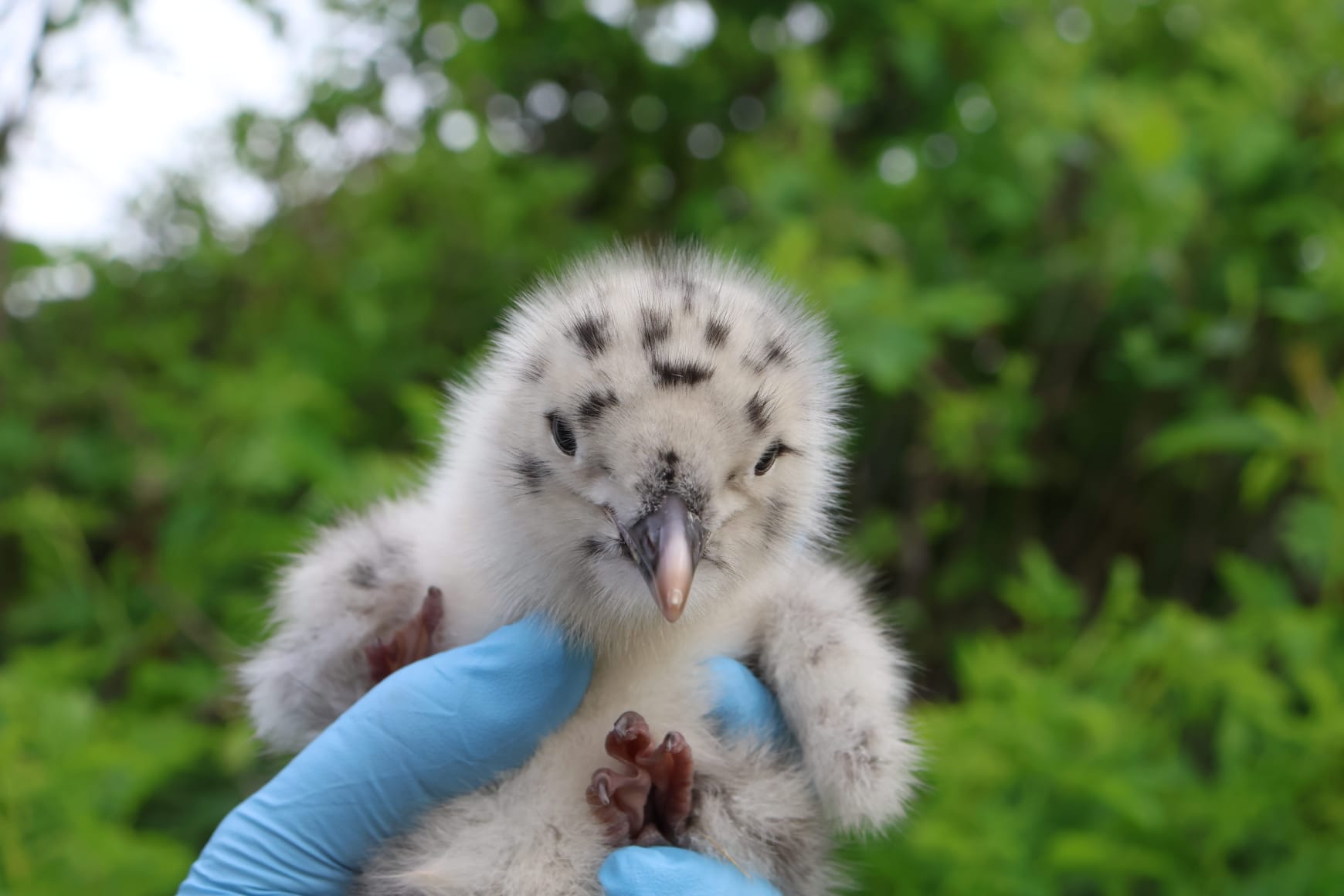
OK now prepare yourself for a overload of cuteness. If you are not a gull lover you might become one after seeing their little faces. I have seen many a non-bird lover welcome a soft spot for these little guys.
Some stories:
Fieldwork can be challenging at times, which is highlighted especially if you are an individual who trips over things. Alas I am one such individual, and on this particular day I was walking down the path to “Grass Lab”, where we store our samples for the day and I happened to trip/twist my ankle. In the words of Kate I “looked like I was learning to walk in heals”. Thankfully I was wearing my thick boots so I didn’t manage to hurt it too badly but it was definitely sore the next day. The bright side of this stumble was Kate almost peeing her pants from laughing so hard.
You already heard about me getting covered in flying fecal matter from the mother of the three chicks above but we also had a hilarious - to us at least - incident with a herring gull. We had just finished sampling a set of three chicks which just could not stop pooping. Like each chick pooping three times kind of not stopping - a great sample by the way. Afterwards we watched this adult herring gull walk up near us. My colleague and I spoke to him saying “sir do you have some time to …” and before we could finish the words “poop for us” this gull proceeded to release a lovely sample and then simply walk away. This had us billowing with laughter as we collected the sample.
Finally we have nest 20 which we waited a full week for the chicks to hatch. When they finally we leaped at the chance to sample the chicks. The parent gull had different plans. I am usually the grabber in our group so I waddled on up with a colleague armed with a gull stick - see here. The adult gull flushed off the nest and I grabbed the chicks, so far so good. However, rather than simply moving away the adult decided to fly up on to my head and try to stick it’s bill in the holes of my helmet. Thankfully it was not successful and soon flapped away. Nonetheless that is a memerable parent that I am looking forward to meeting again soon. If you want to see them you can check out figure 3 of this blog post.
In total, this was an amazing trip and I look forward to seeing these parents and chicks on the island again when I return for fledgling banding. The chicks will be much bigger and present a whole new adventure in gull wrangling for us.
Until then keep your eyes to the sky.
Cheers,
Jonathan Dain